Our Team
Marmara University
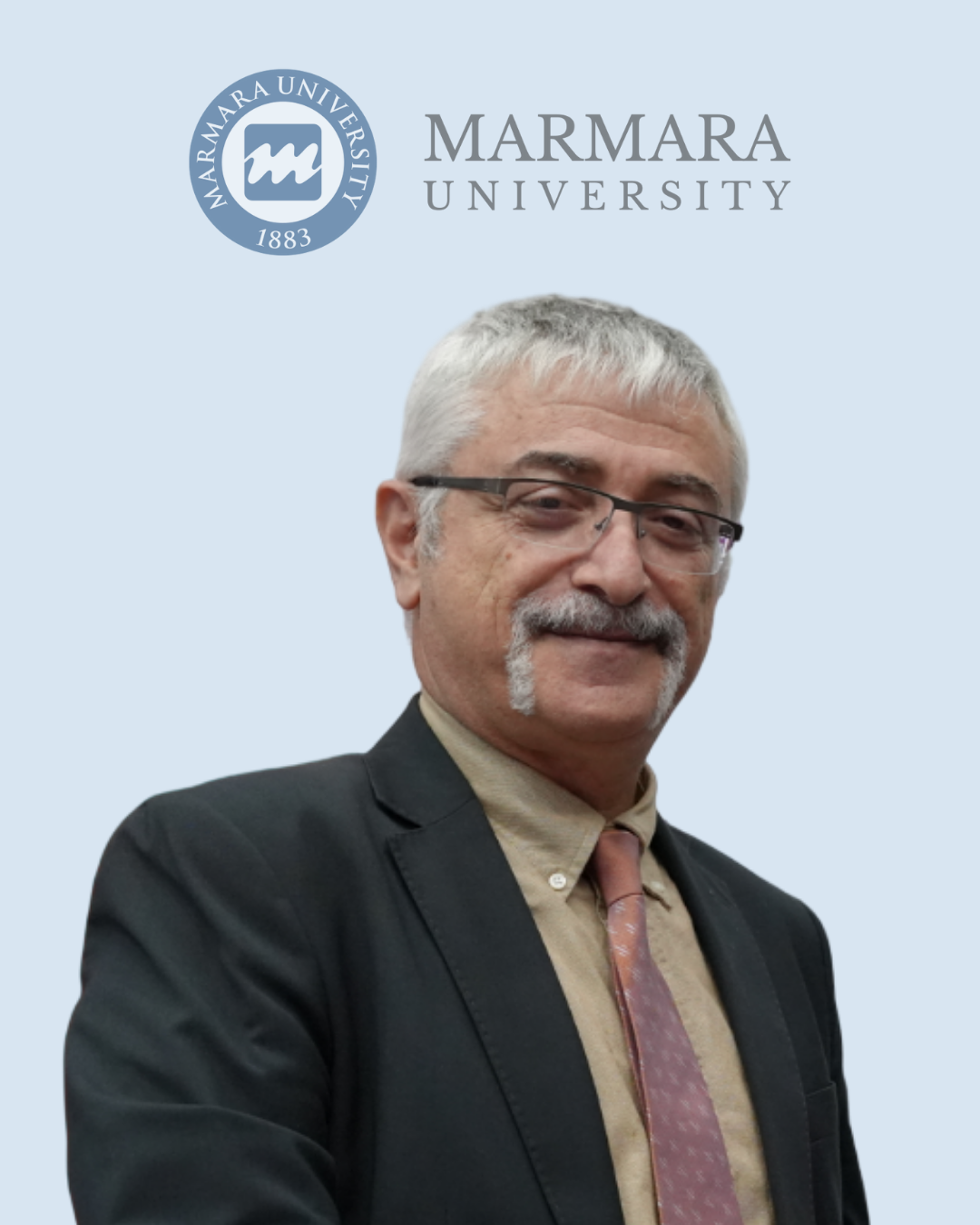
Prof. Erhan Doğan
Coordinator of TRACHMED Project, Full Professor at Marmara University, Faculty of Political Sciences, Political Science and International Department
With over twenty years of academic experience, he has served as Assistant Professor, Associate Professor, and Professor, and has conducted research at institutions such as Dublin City University and Ohio State University.
He earned his PhD with a dissertation on Turkey’s foreign policy formation toward the European Union, focusing on the European Council summits between 1997 and 1999. His Master’s thesis analyzed the United Nations Security Council during the Korean and Gulf crises. His research interests include Turkish foreign policy, civil society, democratization, and non-governmental organizations, alongside comparative regional studies in Central Asia, the Mediterranean, and Europe.
Professor Doğan has supervised numerous graduate theses on humanitarian intervention, migration, and international relations theory. He has published in leading journals and contributed books and chapters on political science and global governance. He has also led and participated in international projects, including Horizon 2020 initiatives on governance and societal transformation in Central Asia. Recipient of TÜBİTAK’s “Eşik Üstü Ödülü,” he combines academic expertise with professional experience in international trade operations at Garanti Bankası.
![IbrahimMazlum[3208].jpg (109 KB)](/dosya/project/trachmed/Our%20Team/IbrahimMazlum%5B3208%5D.jpg)
Dr. İbrahim Mazlum
Senior Researcher at Marmara University, Faculty of Political Sciences, Political Science and International Department
Dr. İbrahim Mazlum is a faculty member in the Department of Political Science and International Relations (English) at Marmara University, where he completed his PhD in 2003. In 1996, he conducted research at Tel Aviv University’s Department of Geography with support from the Turkish Ministry of National Education and the Israeli Government. Between 2000 and 2001, he was a fellow of the Turkish Academy of Sciences (TÜBA) Integrated Domestic and International PhD Program at the University of Arizona’s Center for Middle Eastern Studies. He later carried out research at the School of Oriental and African Studies (SOAS), University of London, during 2002–2003.
Dr. Mazlum’s research focuses on International Relations theories, Critical Security Studies, and the links between environment, climate change, and security. He also specializes in transboundary water issues in the Middle East, hydro-politics, regional security, and Middle Eastern studies. His publications include book chapters and articles in national and international journals, often addressing sustainability and geopolitics.
In addition to his research, he actively supervises graduate theses and contributes to academic and open-access platforms.
University of Bremen (Research Centre for East European Studies)
Prof. Heiko Pleines
Deputy Director and Head of the Dept. of Politics and Economics at the Research Centre for East European Studies and Professor of Comparative Politics at the University of Bremen.
Heiko Pleines studied at the School of Slavonic and East European Studies (University College London) and the Ruhr-University Bochum. He received his PhD in Political Science from Free University Berlin. In 2015 he was appointed as Professor of Comparative Politics and as Deputy Director of the Research Centre for East European Studies at the University of Bremen. Since the 1990s he has been conducting research on pipeline politics and energy security, covering domestic debates and policy making as well as international relations. In TRACHMED he serves as Energy Security Stream Leader.

Anastasia Stoll
Academic Manager at the Dept. of Politics and Economics at the Research Centre for East European Studies at the University of Bremen
Anastasia Stoll studied Political Science and Slavic Philology at the Georg-August-Universitaet Goettingen and at the University of Bremen. Since 2015, she has been working as academic manager at the Dept. of Politics and Economics and has been responsible for EU-funded programmes such as Innovative Training Networks and, currently, Staff Exchanges. For TRACHMED she works as administrative coordinator. In addition to managing duties, Anastasia serves as the editor of the German-language journal Russland-Analysen.
University of Granada
Prof. Francisco Entrena Durán
National Coordinator of TRACHMED at the University of Granada, where he is Emeritus Professor of Sociology.
He previously taught at the Complutense University of Madrid (1985–1990) and later at the University of Granada as Senior Lecturer (1990–2007) and Full Professor (2007–2025). He holds a PhD in Sociology from the Complutense University, where he received a National Prize for Completion of University Studies. His research focuses on Latin America, Rural Sociology, Sociology of Food, Globalisation, migration, and local–global interactions. He has carried out research stays across Europe and Latin America and has led or
participated in numerous national and international projects, including ALFA, Framework, and Horizon–MSCA initiatives. He is the author of 166 publications, many of them appearing in internationally recognised books and journals, and has supervised 27 doctoral theses. Full CV available at: https://www.ugr.es/~fentrena/CVeng.pdf
Dublin City University
Prof. Ronaldo Munck
Prof. Munck is Professor Emeritus of Sociology and Civic Engagement at Dublin City University.
A political sociologist with an international reputation, he has authored or edited over 40 books on global labor studies, development theory, and Latin American politics. His recent work includes Social Transformation and the World Economy (2024) and the forthcoming Advanced Introduction to Global Labour(2026).
A pioneer of civic engagement in higher education, Professor Munck served as the founding Head of Civic Engagement at DCU and the first Chair of Campus Engage, Ireland’s national network for community-based research. His influence extends to major policy roles with the Council of Europe, the EU, and the International Panel on Social Progress. Throughout his career, which spans leadership roles in Ireland, South Africa, and the UK, he has remained a vital voice in rethinking the democratic mission of the university and the future of work in a globalized world.
Chouaib Doukkali University, Morocco
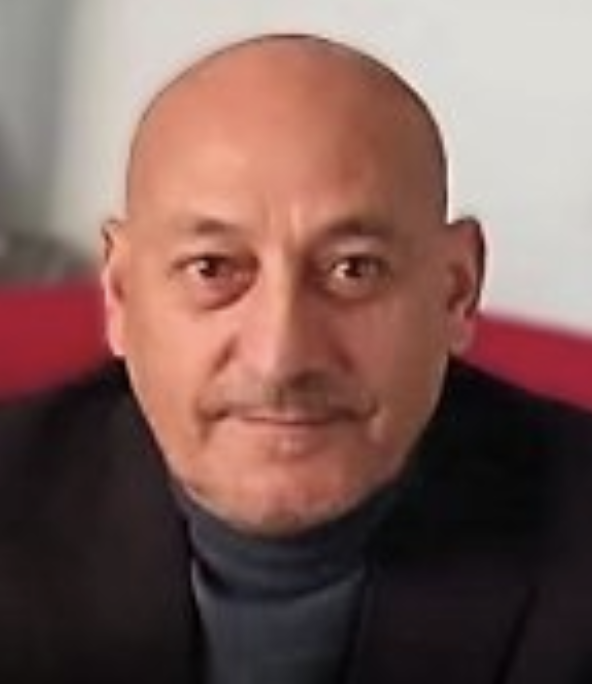
Prof. Kamal Labbassi
Prof. Labbassi is a Full Professor at Chouaib Doukkali University, Morocco since 1991 and Head of the research unit “Geosciences & Remote Sensing”. He is also a Visiting Professor at the University of Nantes (France).
He serves as President of the African Association of Remote Sensing of the Environment (AARSE) and Vice-President of the International Society for Digital Earth (ISDE). He is a member of the DBAR Working Group on Water Resources and Director of the International Center of Excellence on Water Resources, established under the DBAR program.
Professor Labbassi has extensive experience as an expert and consultant for international organizations, including the World Bank, the African Union Commission, and the African Academy of Sciences. He is also a peer reviewer for the GMES & Africa programme.
His research focuses on remote sensing applications in geosciences. He has led several international research projects, supervised numerous Master’s and PhD theses, and authored or co-authored many scientific publications.
Symbiosis, Greece
Despina Syrri
Founder of Symbiosis-School of Political Studies in Greece, affiliated to the Council of Europe Network of Schools.
Despina Syrri served as Education Specialist at the UNICEF Refugee and Migrant response in Greece, Advisor to the Regional Cooperation Council Political department in Sarajevo and Senior Expert on the Roma Integration 2020 in Belgrade. She has been a visiting fellow at the Amsterdam Centre for Holocaust and Genocide Studies, and director of research and international cooperation at the Immigration Policy Institute in Greece; worked amongst others with Reuters and Athens News, the Berlin Migration Netzwerk, Oxford Refugee Studies Centre and British Council on issues of post-conflict
development, migration, refugees, borders and the integration of the Western Balkans to the European Union. She has cooperated with the OSCE/ODHIR, Council of Europe and EU Fundamental Rights Agency. Syrri taught Political Science and Political Anthropology at the American College of Thessaloniki. She has published journal articles and book chapters in Greek, South Slavic and English, and authored research papers and documentaries
Ljubisa Vrencev
Founder Symbiosis-School of Political studies in Greece, affiliated to the Council of Europe Network.
Since 1997 Ljubisa Vrencev has worked with national and international NGOs on local development, communication and media, reconciliation and forced displacement in Serbia, North Macedonia, Kosovo, Bosnia and Herzegovina and Croatia. He also worked with UNOPS, UNDP, Cooperazione Italiana and International Organization for Migration as consultant on development of sustainable return policies. He holds an MA in Local Development for the Balkans from Trento/Bolzano Universities. In 2015 he coordinated the Humanitarian Response Rapid Assessment of the refugee crisis in Greece on
the Aegean islands in cooperation with SolidarityNow and the Norwegian Refugee Council. As Programme Coordinator of Arbeiter Samariter Bund since June 2016 he manages refugee response funded by DG HOME, DG ECHO and the German Foreign Ministry. He has been a lecturer on diversity and communication for migrant communities and authored papers on development and migration issues. He speaks fluently South Slavic languages, English, Italian and Greek.
The American University in Cairo (Egypt)
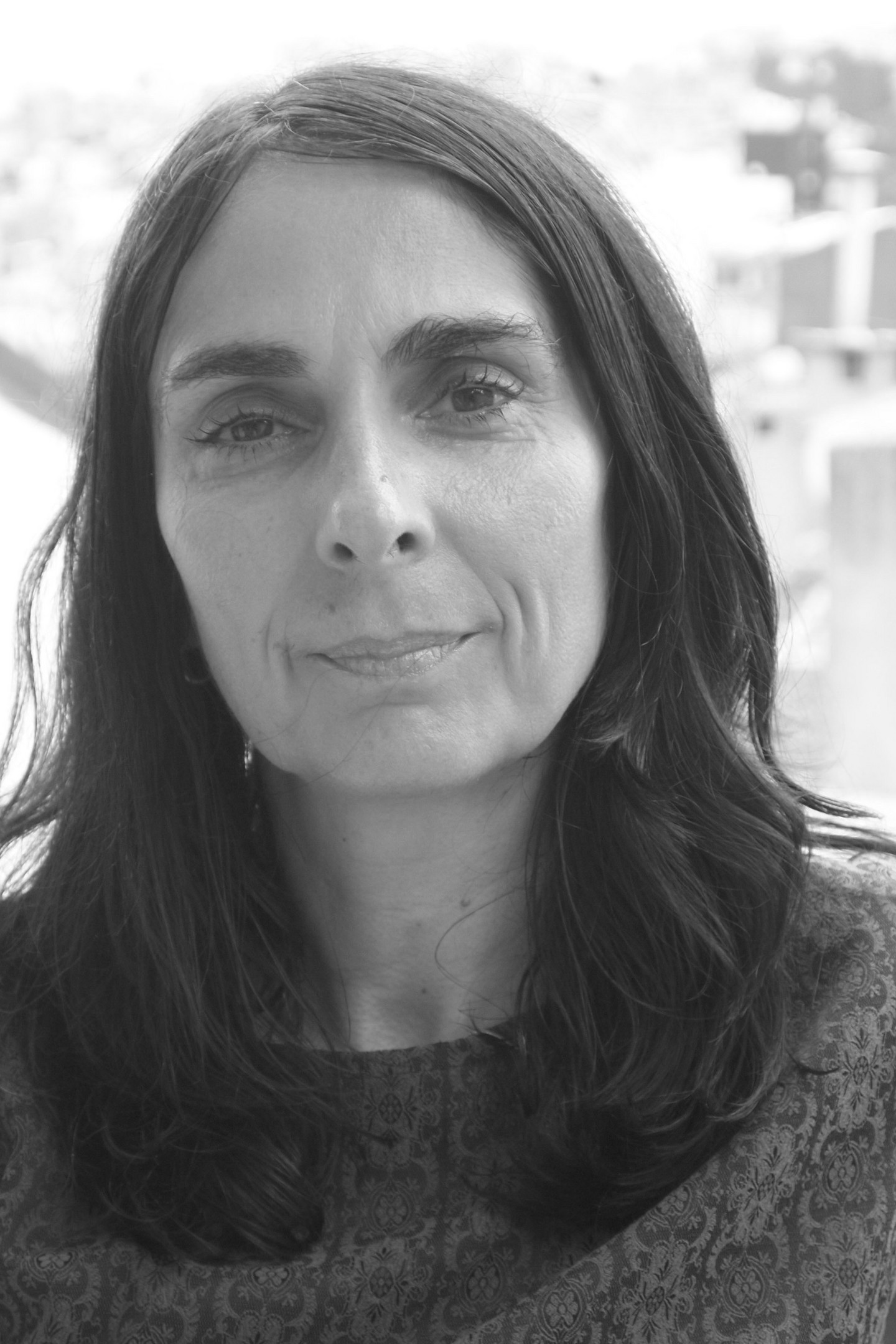
Gerda Heck
Gerda Heck is Assistant Professor in the Department of Sociology, Egyptology and Anthropology (SEA) and the Center for Migration and Refugee Studies (CMRS) at The American University in Cairo. Her academic work and research focus on migration and border regimes, urban studies, Migration governance and European externalization politics, migrant networks, organizing, and infrastructures, gender and migration, religion and new concepts of citizenship. She has conducted research in Brazil, China, Democratic Republic of Congo, Egypt, France, Ghana, Germany, Morocco, Turkey and the USA.
Arab Forum For Alternatives
.jpg)
Shimaa ElSharkawy
Researcher and Projects Manager at Arab Forum for Alternatives.
Doctoral candidate of Political Science Faculty of Economics and Political Science (FEPS), Cairo University. Thesis on: City Transformations: Exploring the Politics of Place and Identity in the Arab Novel. Master of Science in Political Science, Faculty of Economics and Political Science (FEPS), Cairo University. Thesis: “Literature as a Source for Political Thought in Egypt: A Study on City and Power Relations (Cairo as a Model)”. With over 12 years of experience since graduating in 2011, Shimaa has built a distinguished career in research and project coordination and management. Her expertise extends to developing training curricula and conducting training sessions for fresh graduates and junior scholars/researchers in the areas of public policies, policy recommendation paper writing,
and research skills. Research Interests: Urban Politics, Political Theory, Public Space, Decentralization, The Relationship Between Literature and Politics. My diverse research interests reflect a commitment to understanding and contributing to the complex dynamics of political science, with a focus on urban governance, public policy, and the intersection of literature and politics.
Mediterranean School of Business (MSB)
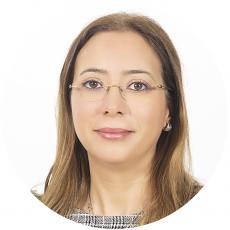
Sana Mami Kefi
Associate Professor of Economics at the Mediterranean School of Business (MSB).
She holds a Ph.D. and a M.Sc. in Economics from the University of Quebec at Montreal (UQAM). Prior to joining MSB, she worked as a Consultant for the Development Research Department of the African Development Bank (AfDB). She also was a Teaching Assistant at the University of Quebec at Montreal (UQAM). Her research interests include development economics, economics of immigration, household choices and economics of education.
This page updated by Exploring Transnational Challenges: Climate Change, Migration and Energy lnsecurity in the Mediterranean on 19.02.2026 13:54:10


